
Minnesota Paid Leave: What Businesses Need to Do Now to Prepare for 2026
Business Advisory Team
November 14, 2025
Minnesota’s Paid Family and Medical Leave (PFML) program is officially going live on January 1, 2026, and the time to prepare is now. This statewide program will provide paid leave benefits to eligible workers who need time away for medical or family-related reasons—offering meaningful support for employees but also introducing new compliance and payroll responsibilities for employers.
This guide will walk through:
- What’s happening and when
- Actions required before January 2026
- Key reporting and budgeting considerations
- Employee communication deadlines
- What types of leave qualify
With key implementation dates approaching quickly, it’s essential to stay ahead to avoid penalties, compliance challenges, and year-end payroll headaches.
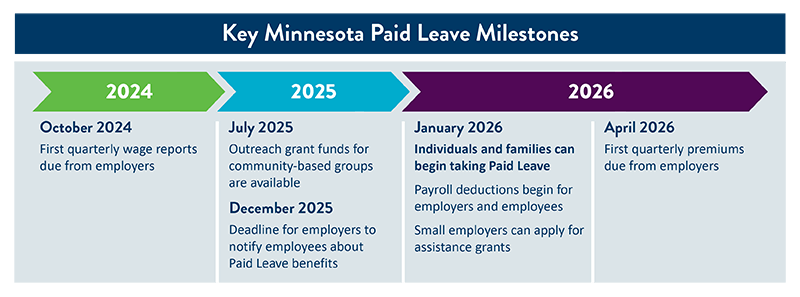
Quick Timeline of Key Deadlines
Step 1 (Happening Now): Ensure Payroll Wage Reporting Is Set Up Correctly
Quarterly wage reporting for PFML uses the same platform you already use for Minnesota Unemployment Insurance reporting. If you outsource payroll, your payroll provider should have already begun updating processes—but do not assume it is automatic.
Action Items:
- Confirm with your payroll provider that PFML wage reporting is configured.
- If you run your own payroll, verify your access and reporting setup at:
https://www.uimn.org
Special Note on Non-Covered Workers
Some individuals are not covered under unemployment insurance, including:
- Federal Government Employees
- Certain Seasonal Workers
If you have any uncovered employees, you will need a separate Paid Leave wage reporting account. Payroll companies can help create this; otherwise, it must be done manually.
Step 2: Plan for Employer and Employee Contribution Costs
PFML is funded through shared contributions, both the employer and employee pay a percentage of covered wages.
Payroll deductions and contributions begin in January 2026, but planning for the cost should begin in budgeting for 2026.
What to Do Now:
- Estimate the cost impact using the contribution rate (updated annually by the state).
- Add this to your 2026 payroll budget and cash flow planning.
- Update internal payroll settings to automate deductions starting in January.
Step 3 (Required by December 1, 2025): Notify Employees Before Payroll Deductions Begin
Employers must provide written notice to employees ahead of the first payroll deduction in January 2026.
Your Notice Must Explain:
- The purpose of PFML
- The contribution amount that will be deducted from paychecks
- When the deductions begin
- How employees can request leave starting January 2026
Providing clear, proactive communication now helps maintain trust and prevent confusion or payroll disputes.
What Leave Qualifies Under Minnesota PFML?
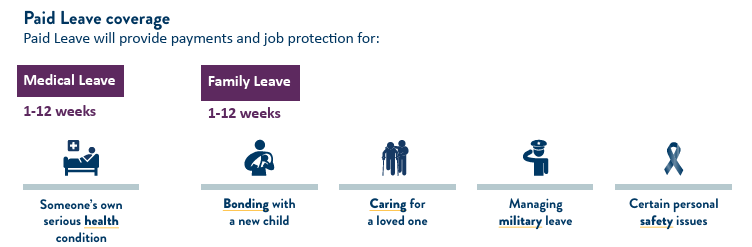
The program provides up to 20 weeks total per benefit year, but 12 weeks per qualified event. Employees may receive up to 12 weeks for each of the following:
How Benefits Are Paid
- The State of Minnesota administers and distributes benefits directly.
- Employers are not responsible for paying PFML benefits themselves.
- Employees must apply (application has not been released yet) for leave and provide required medical or documentation proof.
This aligns the process more closely with unemployment benefits rather than traditional PTO or company-funded leave.
Resources and More Information
For the full program guide, including contribution details and documentation requirements:
https://paidleave.mn.gov
The Time is NOW!
Transitioning to Minnesota Paid Family & Medical Leave does not have to be difficult, but it does require timely preparation.
Your Next Steps:
- Confirm payroll reporting setup with your payroll provider.
- Budget now for employer contribution costs in 2026.
- Prepare employee communication to send no later than December 1, 2025.
If you need support interpreting the rules or preparing your systems, our team is here to help ensure a smooth transition.
Start by visiting the Minnesota Paid Leave website to further familiarize yourself with the new rules. If you work with a payroll company, reach out to them for assistance becoming compliant. If you don’t have a payroll company you work with and need more assistance, our team can help get you on the right path!