The Pros and Cons of Pet Ownership
Mitch Stolba
April 13, 2023

There are potential health benefits, but also costs
Approximately 23 million American households added new pets to their homes during the pandemic, according to a nationwide poll by the American Society for the Prevention of Cruelty to Animals (ASPCA).1 Now, about 70 percent of U.S. households have pets—primarily cats and dogs, but also birds, fish, rabbits, ferrets, reptiles, and more.2
You may be wondering, “Is that good or not?” The answer depends on who you talk to, how well-prepared they were for their new pet, and your perspective—based on your own experience with pets. In the interest of positivity, we’ll save the best for last.
The challenges of having pets
A new pet may be an escape artist, a chewer, a scratcher, or an all-around interloper that hasn’t learned the rules for living indoors. Even if a pet is an exceptionally sweet and “very good” boy or girl, there are challenges to pet ownership. The first one is the initial cost, which includes adoption or purchase fees, vaccinations and other healthcare costs, training, microchipping, supplies, and more. And that’s just the start.
According to the ASPCA, initial costs average $1,030 for a dog, and $455 for a cat.3 After that, the annual costs of food, toys, health insurance, grooming, routine medical costs and preventive medication average $1,391 for dogs and $1,149 for cats. And those are just average costs. The actual costs depend on the pet’s breed, size, age, health conditions, and other considerations.
The first-year and annual costs for fish, reptiles, small birds, rabbits and hamsters are much less, ranging from annual costs of $20 for fish to $660 for rabbits.4 While not all are as snuggly as cats or dogs, they still come with benefits.
The benefits of having pets
The stress and isolation experienced during the pandemic likely prompted the country’s recent rise in pet adoptions, but the potential benefits of these recently adopted pets may extend into the next decade. The Centers for Disease Control (CDC) reports5 that the bond formed between people and their pets is linked to several health benefits, including:
- Decreased blood pressure, cholesterol levels, triglyceride levels, feelings of loneliness, anxiety, and symptoms of PTSD
- Increased opportunities for exercise and outdoor activities
- Better cognitive function in older adults
- More opportunities to socialize
And that’s not all. Everyday Health Group shared these potential health benefits of owning a pet:6
- Pets promote social connectedness. Pet owners report their pets help them connect with other people, and studies have shown that walking a dog in public increases our social interactions.
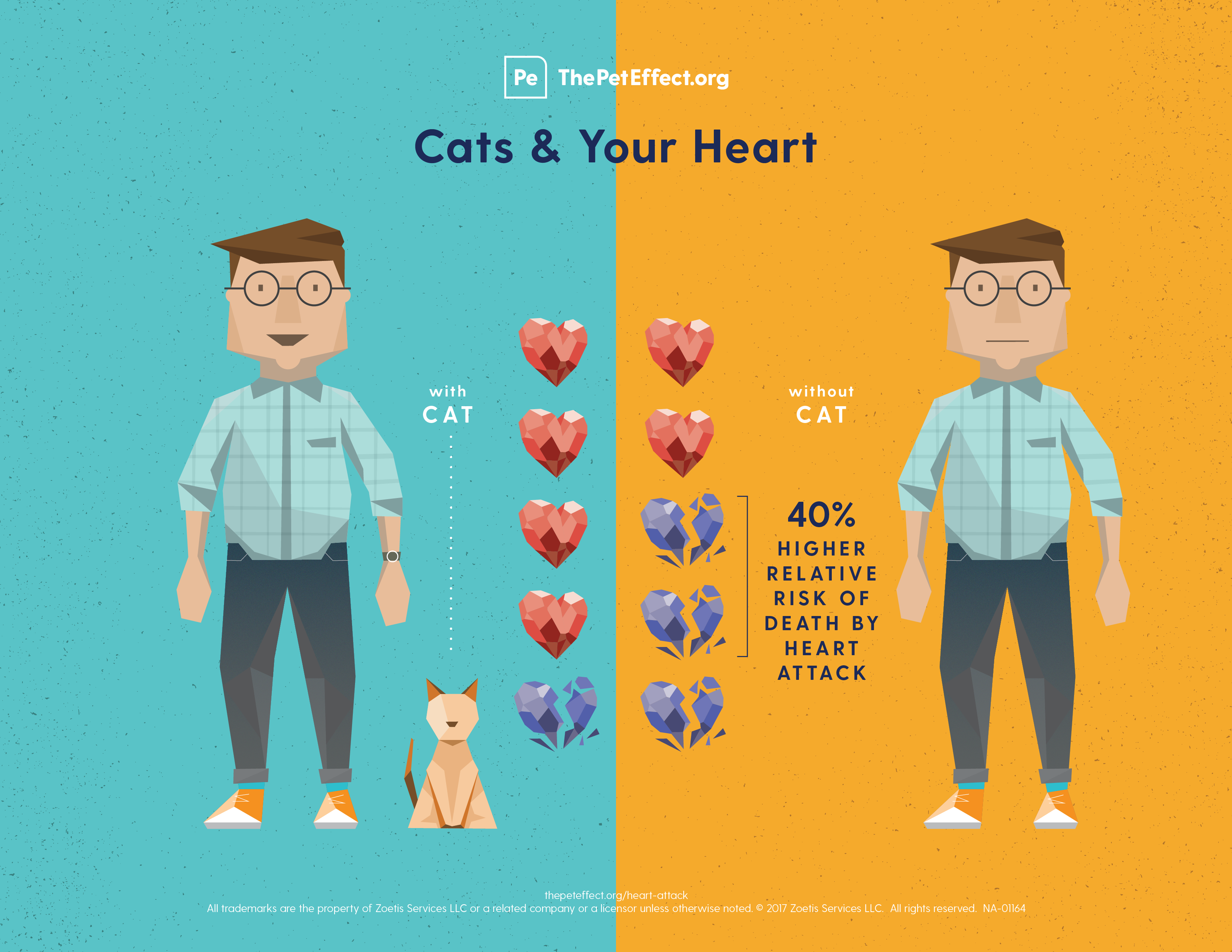
- Pet ownership is linked to improved heart health. For example, a study by the Human Animal Bond Research Institute (HABRI) revealed that people without cats have a 40% higher relative risk of heart attack than cat owners.7
- Dogs can boost your physical activity. Getting up in the morning to let your dog out is just a start. Taking your dog for a walk at least once a day and playing with your dog in your backyard or a nearby park can add up to quite a bit of exercise every week.
- Pets may help prevent loneliness. During the pandemic, researchers found that dog owners reported being less lonely—and with fewer signs of depression—than nondog owners.
- Petting your pet boosts feel-good hormones. Scratching your dog’s belly or your cat’s head may boost oxytocin and endorphins, which can help decrease feelings of stress, depression, anxiety, loneliness, and social isolation.
- Pets may boost your mental health. Pets can often detect when you’re stressed or depressed and come to your side to offer support. Pets are also credited with providing a stronger sense of identity in pet owners with mental health conditions. Also, the daily routines for taking care of pets provide a sense of purpose.7
In most cases, the pros outweigh the cons
Pets are not for everyone in all situations, but most pet owners agree that the good outweighs the bad and they consider their pets to be much-loved members of the family. The American Heart Association conducted a survey of pet owners in 2022 that revealed 95% of pet parents rely on their pets for stress relief.8 According to the survey, the most common ways pets help their owners de-stress is through snuggles (68%), followed by making their owners laugh (67%) and helping them feel less lonely (61%).
Like any commitment, it pays to do your homework in advance. If you’re considering adopting a pet, do some research, get your plans in order, and prepare to add a new member to your family. If you want to review your financial situation first, don’t hesitate to call our advisors.
1 Everyday Health: Six Potential Health Benefits of Owning a Pet
2 2021-2022 APPA National Pet Owners Survey
3 ASPCA: Cutting Health Care Costs
4 Kiplinger: The Cost of Owning 5 Popular Small Household Pets
5 CDC: How to Stay Healthy Around Pets
6 Everyday Health: Six Potential Health Benefits of Owning a Pet
7 One Health Organization: 10 Mental & Physical Health Benefits of Having Pets
8 The American Heart Association: 95% of pet parents rely on their pet for stress relief
Important Disclosures
This material is for general information only and is not intended to provide specific advice or recommendations for any individual. There is no assurance that the views or strategies discussed are suitable for all investors or will yield positive outcomes. Investing involves risks including possible loss of principal.
This material was prepared by LPL Financial.